Best of
Best apps for staying in touch with friends and family
Less work-y, more personal. Tools we'd give to someone who just wants to remember to call their grandmother.

"Keep in touch app" covers two very different jobs, and the right pick depends on which one you have. The first is a memory layer - something that remembers birthdays, what you last talked about, and who you're overdue with, then nudges you. That's a personal CRM. The second is a shared place to actually talk - async video, daily photos, voice notes - that keeps a far-away friendship feeling present between visits. The best setups often use one of each.
We sorted the picks by job, not by hype. Full disclosure: we make Contact Book, which is the memory-layer pick - so read entry one with that in mind, and read on for the apps we'd genuinely send you to instead when the job is different. We weighed five things: does it actually get used, does it remember context (not just dates), is it honest on price, where your data lives, and whether it fits friends-and-family rather than a sales team.
The picks
Tools we'd recommend for anyone with a life outside work looking at stay-in-touch app.
Contact Book has a calmer surface than most: a contact card has a conversation log, life events with reminders, gift histories, family relationships, and a stay-in-touch cadence per person. Quiet, focused, no notifications outside the ones you set yourself.
Strengths
Trade-offs
Best for
Anyone who has 30+ people they truly want to keep in regular touch with.
Apple Reminders / Google Calendar
Free + already on your phone.
If your needs are essentially "don't forget birthdays" + occasional follow-up reminders, the calendar app you already pay nothing for is fine. We say this honestly - you don't need a personal CRM if you're not going to use it.
Strengths
Trade-offs
Best for
People with simple needs and a small circle.
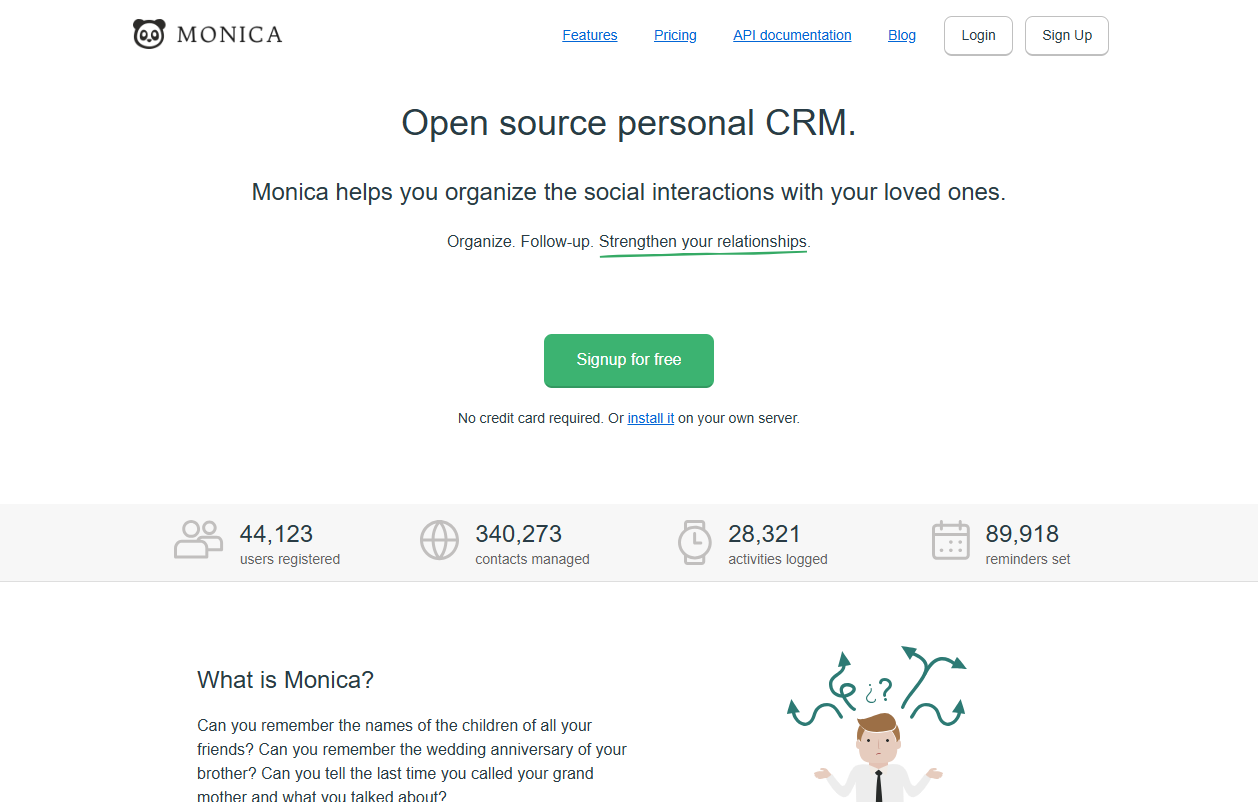
Monica leans into journaling as a feature, which suits people who want to write longer entries about life events, kids' milestones, partners. Self-hostable.
Strengths
Trade-offs
Best for
People who write often and want a journal-shaped surface.
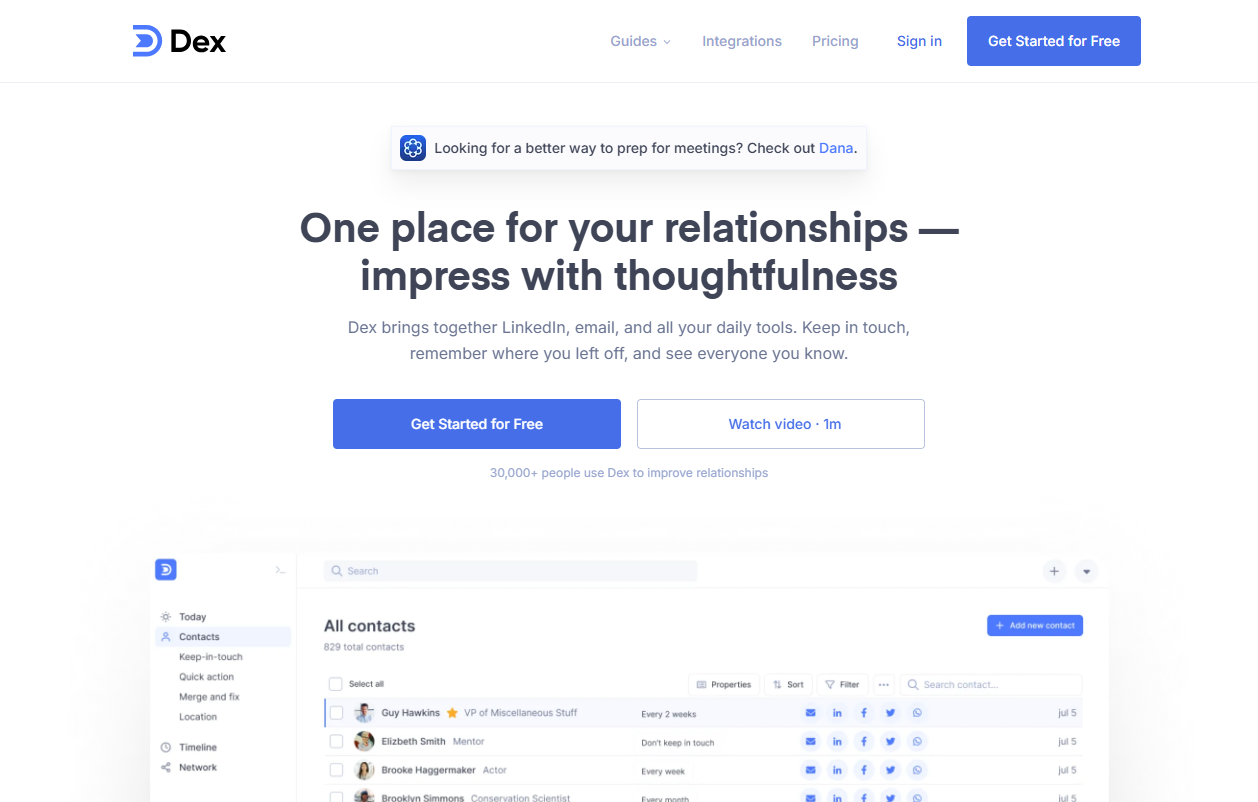
Dex is the networking-leaning pick: it syncs LinkedIn, flags job changes, and centres on "who should I reach out to next" reminders. If the people you want to keep up with are mostly professional contacts you met online, its import flow is hard to beat. Lighter on the family-life fields (gifts, kids, pets) than the personal picks.
Strengths
Trade-offs
Best for
People whose keep-in-touch list is mostly LinkedIn contacts.
Clay (rebranded Mesh) is the design-forward pick - it auto-enriches contacts, scores relationship strength, and surfaces reconnection prompts, all in a genuinely lovely iOS-first app. There's a free tier up to roughly a thousand contacts. The trade is the enrichment: it pulls public data on the people you save, which is the privacy cost the calmer picks deliberately avoid.
Strengths
Trade-offs
Best for
People who'll only stick with an app if it's gorgeous and self-updating.
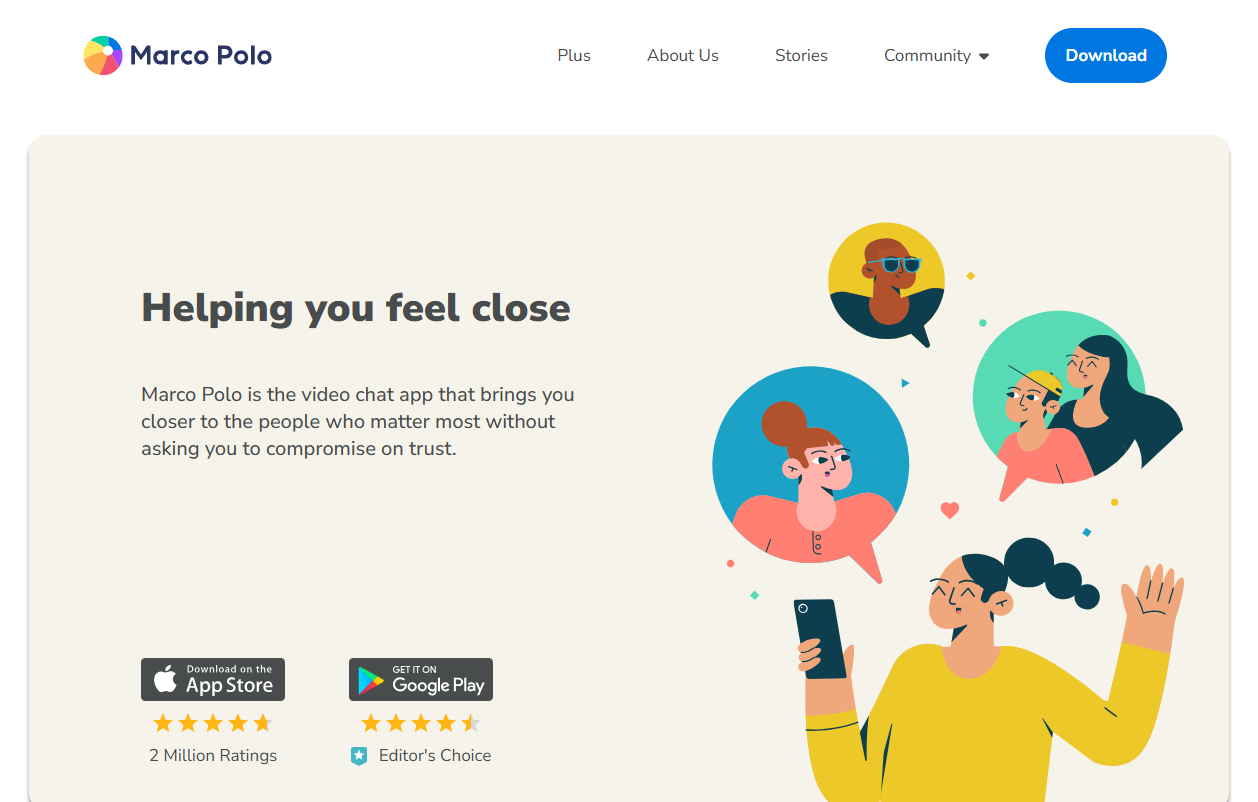
This one isn't a memory layer - it's the conversation. Marco Polo is a "video walkie-talkie": you record a short clip whenever it suits you, they watch and reply when it suits them. For long-distance friends and family across time zones, the async format carries more warmth than a text and dodges the scheduling pain of a live call. Pair it with a memory-layer app that reminds you who's overdue.
Strengths
Trade-offs
Best for
Keeping a far-away friend or family member present between visits.
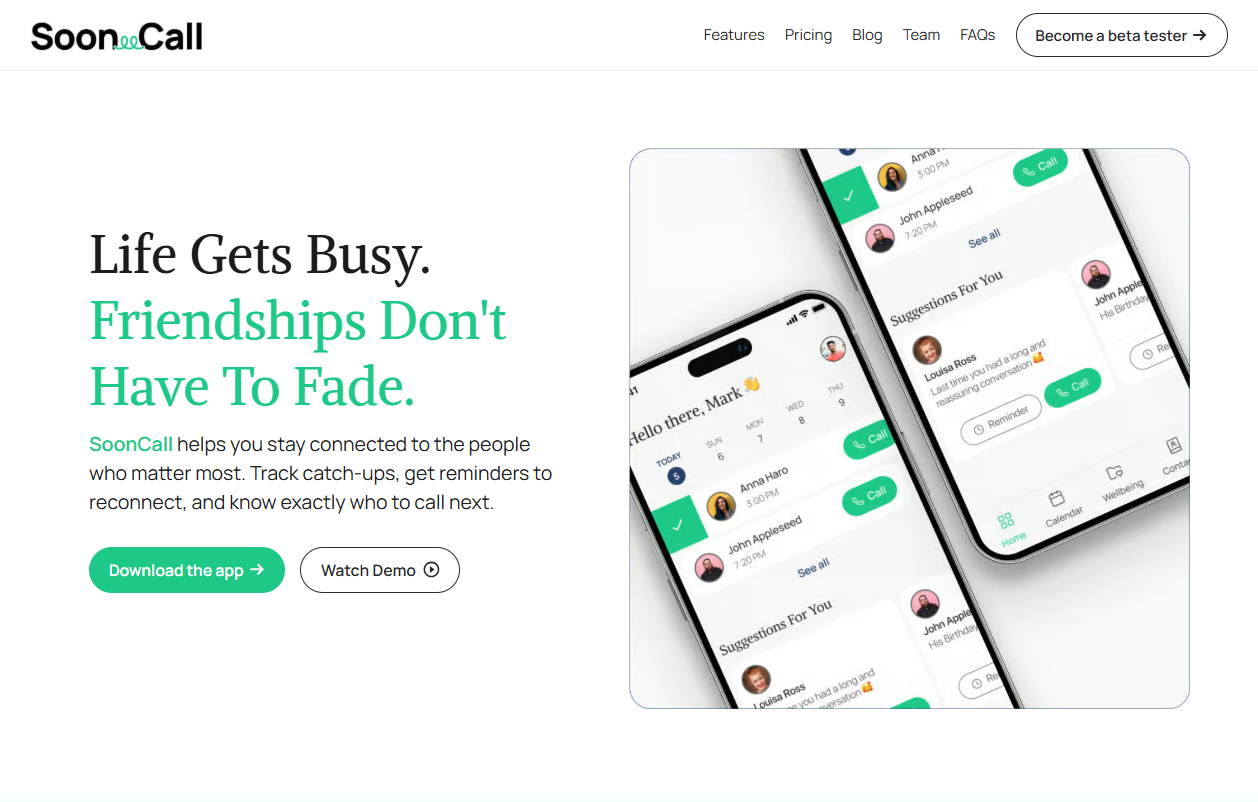
SoonCall is the lightweight tracker for people who don't want a full CRM. It quietly records when you last had a real catch-up with each close person and suggests who to call next. Less feature surface than the personal-CRM picks - no gifts, life events or family graph - but if all you want is a gentle "you haven't spoken to your brother in a while", it does that one thing cleanly.
Strengths
Trade-offs
Best for
A small circle where you just want a nudge to call, nothing more.
How we picked
We split the field by the actual job. The memory-layer tools (Contact Book, Monica, Dex, Clay) remember context and nudge you; the channel tools (Marco Polo) are where the talking happens; the lightweight trackers (SoonCall, or your phone's calendar) do the one simple nudge and nothing else. Most people are happiest with one from the first group and, if friends are far away, one from the second.
On weighting: a keep-in-touch app is worthless if you stop opening it, so we put the most weight on whether it actually gets used and whether it remembers context rather than just dates - the thing a bare calendar can't do. Then price honesty, then where your data lives, then fit for friends-and-family over a work pipeline. AI enrichment we treat as a nice-to-have, not a deciding factor, because it's the axis most likely to be a privacy trade.
If budget or networking is the deciding factor
Two narrower cuts have their own pages. If budget is the whole story, several tools here have genuinely usable free tiers - we lined them up honestly in the best free personal CRMs, flagging which free plans are real and which are demos. If the people you keep up with are mostly professional - founders, recruiting, business development - the picks reshuffle toward import-and-reminder strength, which is the subject of using a personal CRM for networking.
Try Contact Book
Free plan, no credit card. We host in Germany. You can export and delete everything self-serve.
Written by
Julia Yukovich
Co-Founder + CEO
Julia is one of the Co-Founders. She handles design, development, product direction, and most of the support replies that arrive in the morning.
Read next
How to track gifts so you never repeat yourself
Stop sending the same person the same wine for three Christmases running.
Read
How to log life events you only hear about once
How to capture the "oh by the way" moments - the ones that decide future conversations.
Read
Best personal CRM for solopreneurs in 2026
Curated picks for one-person businesses that need a memory layer for clients + collaborators.
Read
Contact Book vs Hippo: relationship-first vs reminder-first
Smaller scope vs broader scope on the same problem.
Read