Best of
The best free personal CRMs (2026)
You shouldn't have to pay to remember your friends' birthdays. Here are the personal CRMs with a genuinely usable free tier - and the honest catch with each.

Keeping in touch is a basic human thing, and the tools that help with it shouldn't all sit behind a paywall. The good news is several personal CRMs have a free tier you can genuinely live in. The catch is that "free" means different things - some are open-source, some are free up to a contact limit, some are free because you're paying with your data. We've sorted the honest free options below and said plainly what each one costs you in something other than money.
We weighted what matters when you're not paying: how usable the free tier really is, whether your data is the product, and whether you can leave with everything if you outgrow it. Our own tool is first, and we say why and where the line sits; the rest are genuine options depending on what you value.
The picks
Tools we'd recommend for people who want to start for free looking at personal CRM.
Contact Book has a free tier built to be genuinely usable - cadence reminders, conversation logs, life events, and a family graph, not a crippled demo nudging you to pay. Where we differ most: free doesn't mean you're the product. We're hosted in Germany, run no third-party trackers, and never train on or sell your data, so the free tier is paid for honestly rather than by mining your relationships. And you can export or delete everything yourself at any time.
Strengths
Trade-offs
Best for
Anyone who wants a genuinely usable free relationship tool without becoming the product.
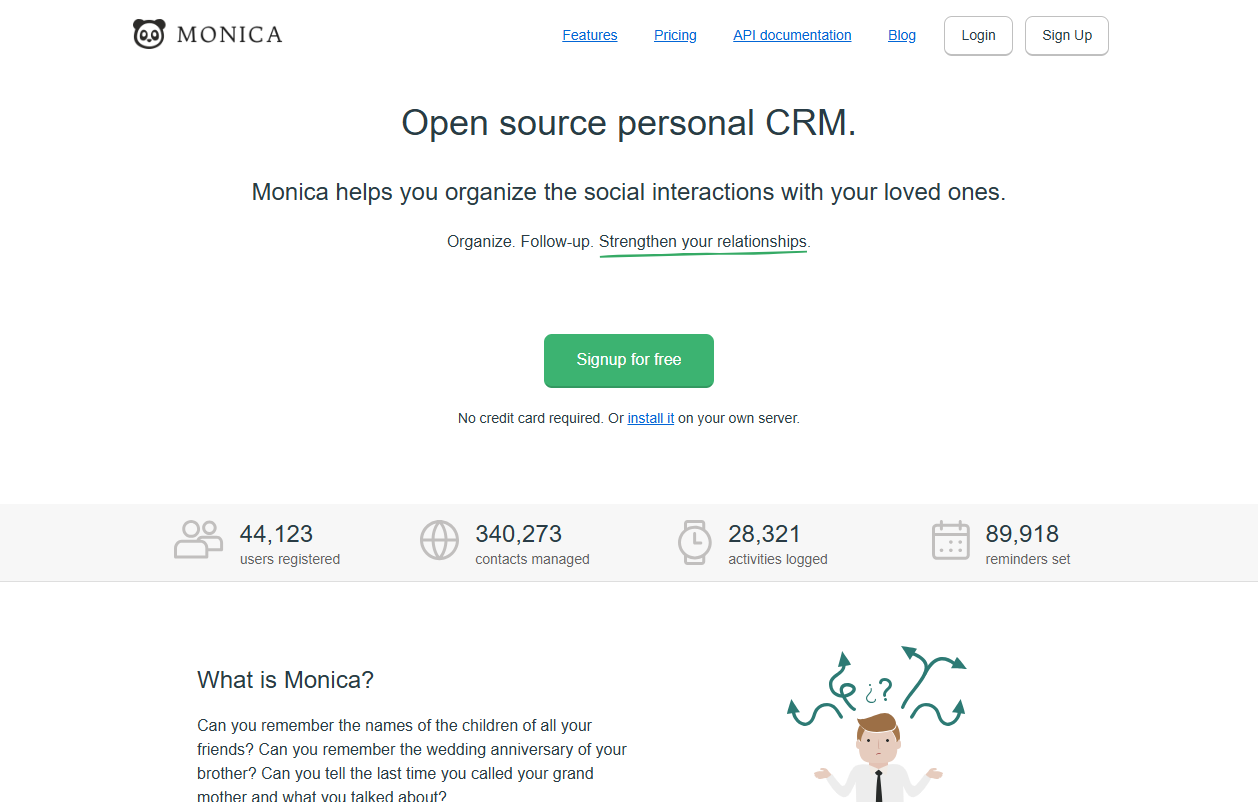
Monica is the best-known open-source personal CRM. If you self-host it, it's free in the truest sense - you run it on your own infrastructure and own the data outright. The hosted version has its own pricing, but the self-hosted route is genuinely free for anyone comfortable with a little setup.
Strengths
Trade-offs
Best for
Technically comfortable people who want to own the whole stack for free.
Google Contacts is free and already in your pocket, and for a basic address book it's hard to beat on price. But be honest about what it is: a free address book, not a relationship tool. There's no cadence, no overdue view, no real conversation log. And the price of free here is the usual one - it lives in an advertising company's ecosystem.
Strengths
Trade-offs
Best for
People who only need a free, synced address book and nothing more.
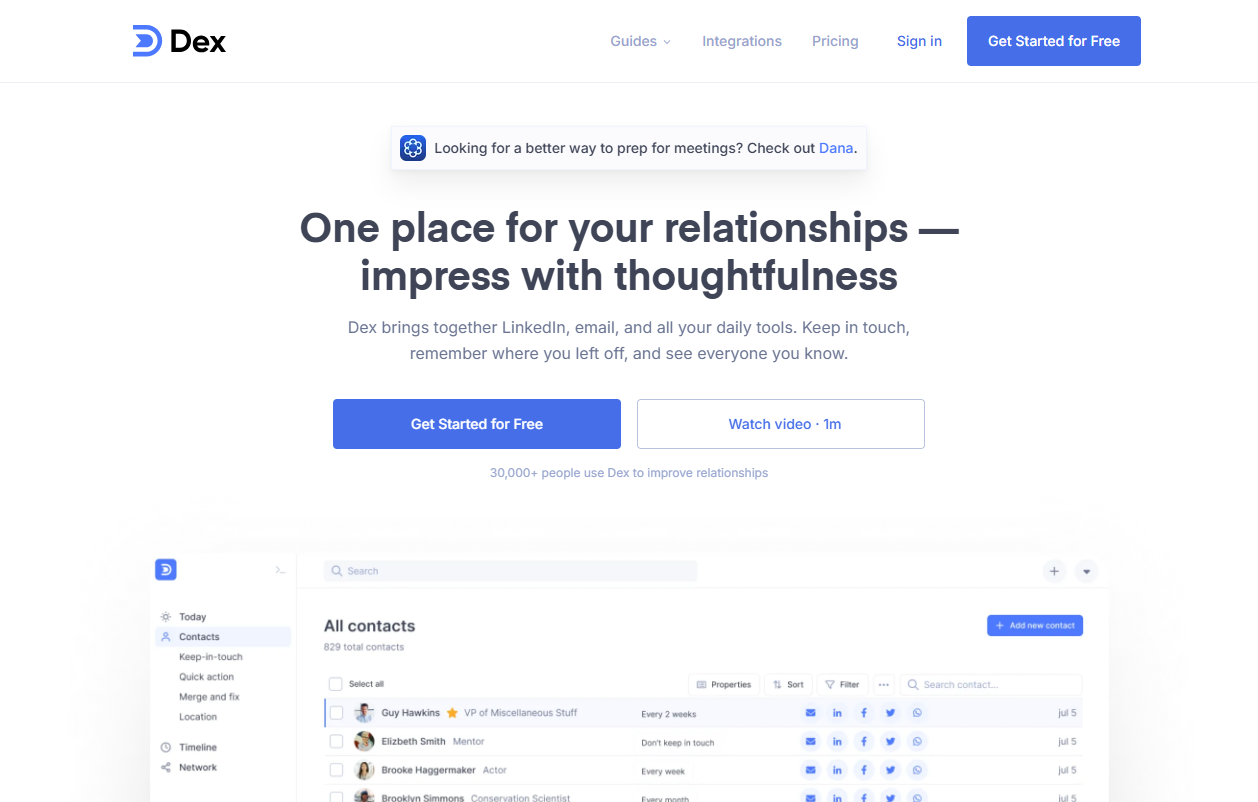
Dex is a polished nudge-first relationship CRM, and its free tier is a genuine tool rather than a trial. The catch is the cap: the free plan tracks roughly 20 relationships, which is fine for an inner circle but runs out the moment you want to hold a real network of friends and weak ties. Past that it's around $12 a month. It's cloud-hosted and leans on syncing your accounts, so it's the opposite end of the privacy spectrum from a deliberate, no-sync log.
Strengths
Trade-offs
Best for
People who want a slick nudge app and only track a small inner circle for free.
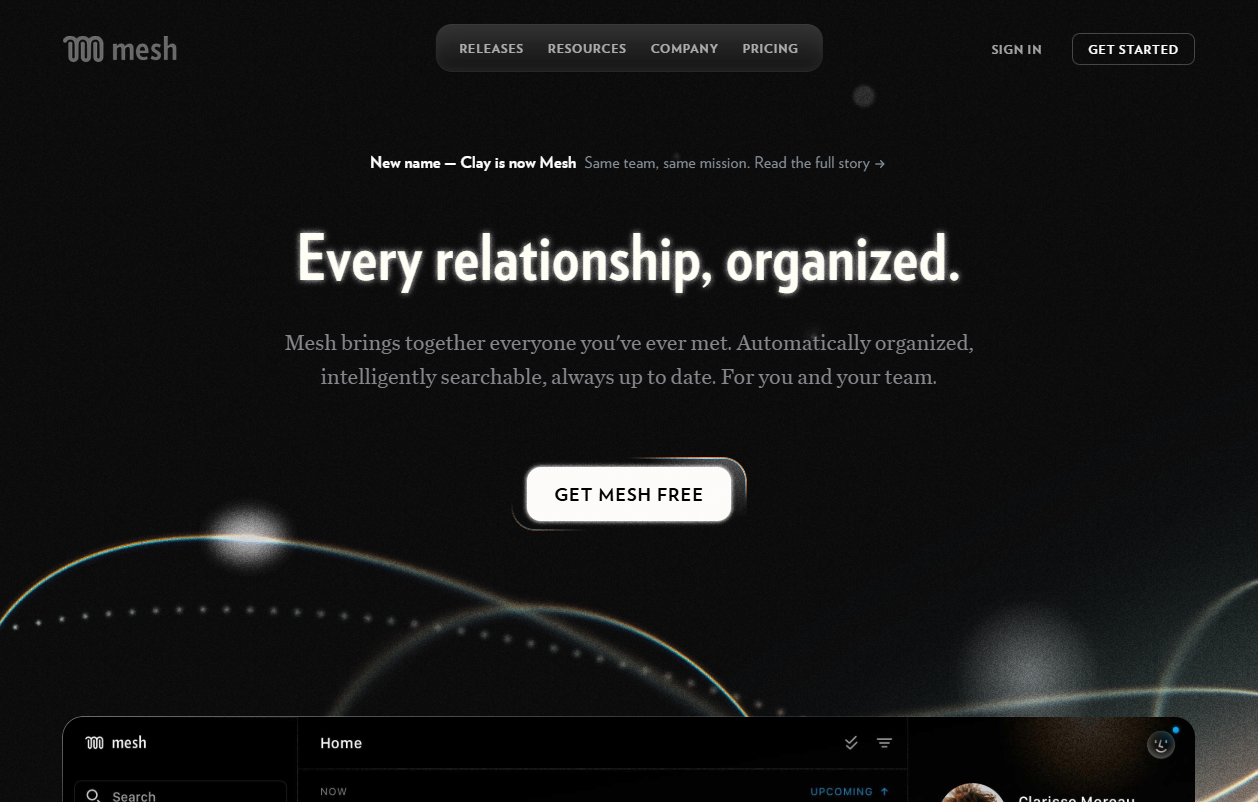
Clay has one of the most generous free tiers - up to around 1,000 contacts - and it auto-builds rich profiles by pulling from your email, calendar, and social accounts. That's the appeal and the catch in one sentence: the magic comes from the tool reading your channels and enriching contacts from the open web. If automatic, hands-off enrichment is the value you want, it's strong. If "a tool that ingests my inbox and social graph" is the line you don't want crossed, this is the trade to look at hard before you connect anything.
Strengths
Trade-offs
Best for
People happy to connect their accounts in exchange for hands-off enrichment.
Free forever, but it's a sales CRM wearing the wrong hat
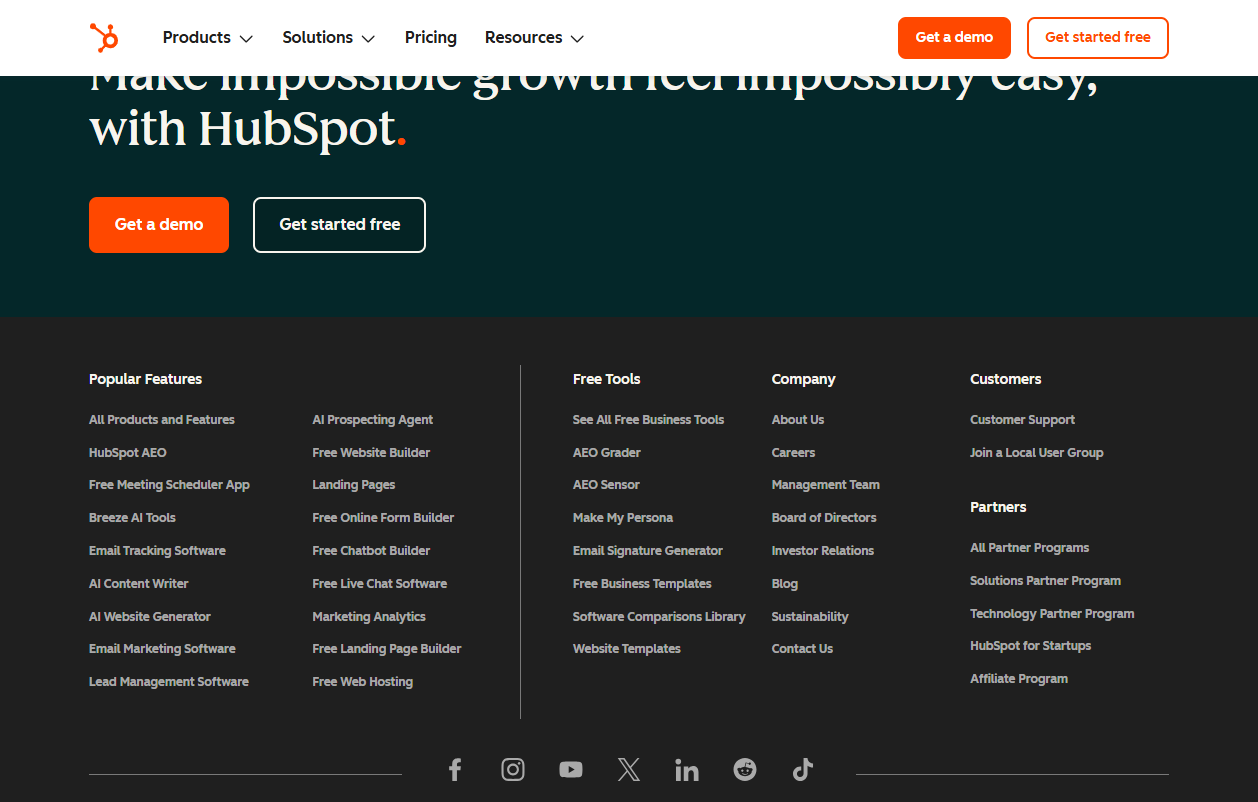
HubSpot's free tier is genuinely free forever and holds effectively unlimited contacts, which is why it shows up on every "free CRM" list. But it's a sales-and-marketing CRM built around deals, pipelines, and email campaigns - not personal relationships. Used for keeping friends warm it feels like logging your people as leads, and 90% of the interface is machinery you'll never touch. Free, yes, but the wrong shape for a personal CRM; see why the sales vs personal split matters.
Strengths
Trade-offs
Best for
People who genuinely also need a sales pipeline and will reuse it for contacts.
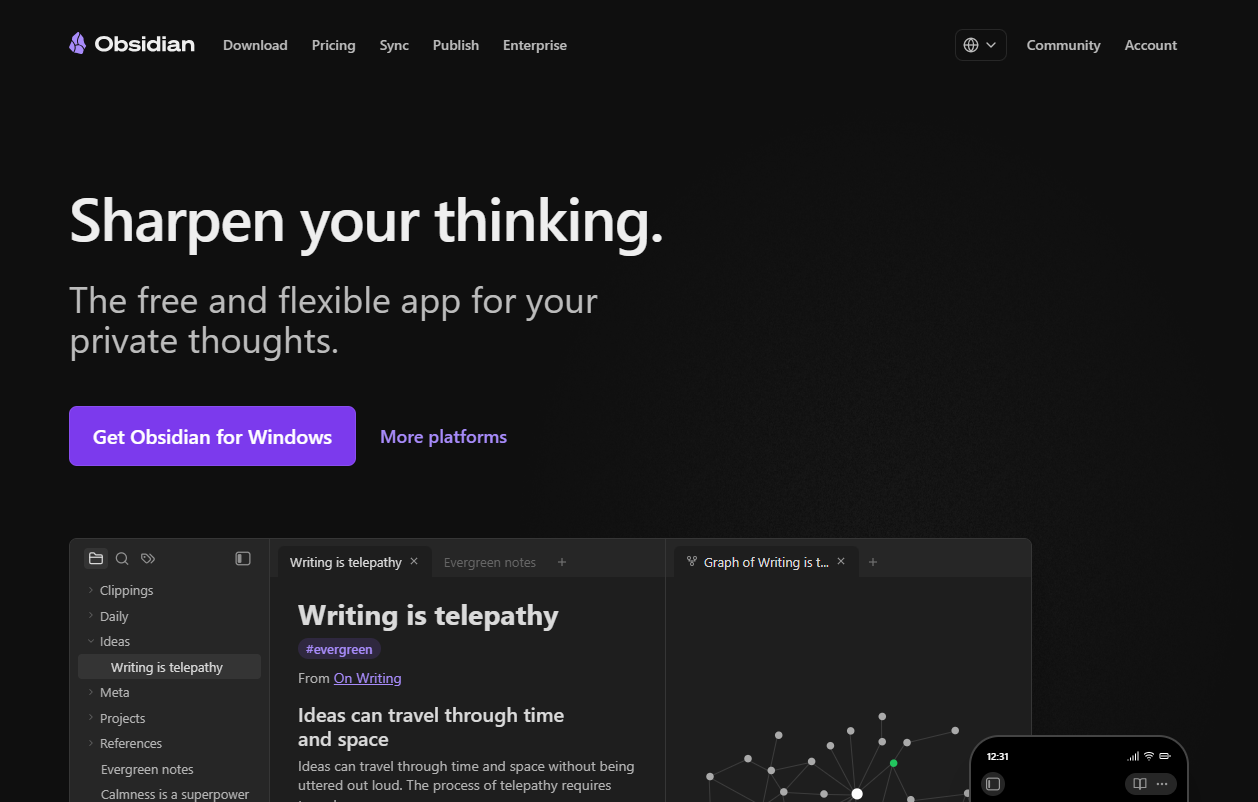
The most overlooked free option is a folder of plain-text notes - in Obsidian, Logseq, or any notes app you already use. One note per person, free forever, completely private and local. The cost isn't money; it's that nothing reminds you. You build and maintain the whole structure yourself, and there's no overdue view to nudge you when a relationship is cooling.
Strengths
Trade-offs
Best for
People who want zero cost and full privacy, and don't need reminders.
How we judged the free tiers
Free tools are easy to list and hard to rank honestly, so we held each to four plain questions. First: is the free tier a real tool or a disguised trial - does it actually let you live in it, or does it cripple the useful parts to push an upgrade? Second: is your data the product - is the free tier funded by mining your relationships, reading your channels, or sitting inside an ad ecosystem? Third: can you leave with everything - full export, self-serve delete, no lock-in. Fourth: does its shape fit a curated personal circle rather than a high-volume sales motion. A tool can be free and still fail three of these, which is why "free" alone is a weak filter.
Watch the contact cap, not just the price
The quiet trap in free relationship tools is the contact cap. Dex's free plan holds around 20 relationships; a free Airtable base caps near 1,000 records; some apps stop you at a few dozen contacts and call it free. A cap of 20 is fine for an inner circle but useless the moment you want to hold the weak ties and old colleagues that make up most of a real network. Clay and HubSpot go the other way with thousands of contacts, but pay for the generosity through enrichment that reads your accounts or an interface built for sales. Read the cap and the funding model together: a high limit funded by ingesting your inbox isn't more free than a modest one funded honestly - it's a different bill.
What 'free' actually costs
The most important thing to check on any free tier is what you're paying with instead of money. Open-source self-hosting costs your time and a little technical comfort. A free address book inside a big platform costs you presence in an advertising ecosystem. A free plain-text vault costs you the reminders you have to provide yourself. And some free tiers cost you your data - if the business model isn't clear, your relationships may be the product. We built our free tier to be honest about this: it's a real tool, not a trial, and it's paid for without mining your data, because relationship notes are exactly the kind of sensitive material that should never become someone's ad inventory. Whichever you pick, ask what the free is funded by, and make sure the answer is one you're comfortable with.
Free vs paid: when an upgrade is worth it
For a personal circle, a good free tier is usually the whole answer - you're tending dozens of relationships, not thousands, so contact caps and automation rarely bite. The honest reasons to pay are narrow: you've outgrown a hard contact cap, you want a feature the free tier genuinely gates, or you simply want to support a tool you'd hate to see funded by ads instead. Be wary of upgrading to escape friction that a calmer tool wouldn't have created in the first place. If you're still working out what a personal CRM even is and whether you need one, start free, live in it for a month, and let the limits - if any - tell you when it's time.
Try Contact Book
Free plan, no credit card. We host in Germany. You can export and delete everything self-serve.
Read next
Best apps for staying in touch with friends and family
For the personal side - friends, family, the people who'd notice if you went quiet.
Read
Best privacy-respecting contact apps in 2026
Curated picks for people who treat their contact list as private data.
Read
Contact Book vs Google Contacts: which one keeps relationships warm?
A directory vs a relationship log: where each one shines and where they don't.
Read